Want to be in the loop?
subscribe to
our notification
Business News
VIETNAM GARMENT &TEXTILE UNDER TPP IMPACT
Vietnam should be prepared for the next two years once the TPP agreement is executed to avoid potential difficulties," said Mr Vuong Duc Anh, Director of Import-Export Department, Ministry of Industry and Trade at the round-table discussion themed: "Solutions to help garment & textile enterprises to benefit most from the TPP". The event was hosted by the Vietnam Business Forum Newspaper in Hanoi.
Garment & textile is one of the most beneficial sectors
According to the assessment of the experts, among the sectors that benefit most from the TPP, the textile and garment industry of Vietnam is one of the sectors that will benefit most. Once the TPP is put in effect, the tariffs of garment & textile exports to the United States will fall to close to 0 per cent from 17 per cent as today. TPP also helps textile and footwear export turnovers of Vietnam to grow to US$165 billion by 2025. Without the TPP, this figure is only estimated at US$113 billion. This is also one of the most interesting industries of the TPP as 12 member countries agreed to take a separate chapter about garment & textile, apart from chapter 3 that states the market access for goods in general.
According to Mr Truong Van Cam, Vice President and General Secretary of Vietnam Textile and Apparel Association (VITAS), the garment & textile industry within the TPP countries is an industry with huge benefits. Specifically, the total import turnover of the United States accounts for about US$100 billion per year and Japan for about US$50 billion per year while other countries such as Vietnam, the garment & textile industry has leading export turnovers. Vietnam is not comparable to other 11 member countries of the TPP, but we still try to negotiate to earn the most benefits for our textile, leather and footwear industries.
The TPP helps push up the growth of the garment & textile industry. The export turnover of the garment & textile sector in TPP markets now accounts for 65 per cent of the garment & textile of the country; in 2015, the garment & textile export turnover reached nearly US$15 billion, of which US$11 billion was from the U.S and US$2.8 billion from Japan. When the tax rate is adjusted to be 0 per cent, textile and garment enterprises will increase business efficiency and competitiveness so the garment & textile export turnovers of Vietnam after TPP in the coming years could increase by 15-20 per cent per year.
Garment & textile industry is also creating more jobs, solving labour problems, especially rural workers because textile workers are not required to be skilled as of some other industries.
Notably, the TPP lays good conditions to attract foreign investors to restructure the garment & textile sector with major capital investment in the upstream stages including yarn, fabric, and dyeing and finishing due to the production standards. It is obvious that there are many foreign investors that will invest in Vietnam.
The TPP also promotes the institutional reforms to create a more competitive and transparent business environment. Some negative impacts, particularly the overwhelming foreign investment over the domestic investment, might happen and the investors are those who benefit most from the TPP if domestic companies do not join hands for sustainable development.
Many difficulties
The most challenge of the garment & textile industry is a shortage of materials. Currently, 70 per cent of the raw materials of garment & textile industry is imported, of which the majority of imports from countries (e.g. China) that are not TPP members. This will pose challenges to the Vietnam's garment sector in the integration process ahead because the TPP requires exporters to show the origin of the garment & textile products to enjoy preferential tariffs; it means that all the inputs listed for tax exemption must be produced in the countries participating in the TPP.
Mr Vu Huy Dong, General Director of Dam San JSC, said that although Vietnam is less developed than other countries but its garment & textile industry is highly developed. In terms of the yarn, Vietnam ranks fifth in the world. Why Vietnam could not develop its yarn producing industry is still an open question.
We all produce the fibre (80 per cent), but bleaching and dyeing will cause environmental pollution so this requires the qualification of employees to update new technology.
In addition, Mr Dong noted that to meet the regulations of the TPP, the Vietnam needs to invest more in the garment & textile and dyeing industry; however, the textile and garment have not been incorporated. This is a problem. Therefore, the Government and enterprises need to join hands to solve this problem to help bring more profits for the industry and increase their investment and intensive research on textiles and fibres.
In fact, the investment of the garment & textile industry is still limited, particularly for the garment industry. Besides, the machinery is outdated and unproductive so there should be more investment in machinery and equipments.
Grasping opportunities from the TPP
Mr Nguyen Xuan Duong, Chairman of Hung Yen Garment Corporation and Chairman of Hung Yen Business Association, said that to optimize the advantages of the TPP, garment enterprises should prepare the domestic materials (currently, only 10 per cent).
The Vietnam Textile and Apparel Association currently has available areas of sewer treatment and need to call for investment in infrastructure. When partners are required to consume products for Vietnam. Vietnam accepts infrastructure investment options, with denomination of 10-15 per cent. The current institutional policies as well as the production cost are posing difficulties to enterprises. "How we could make the administrative reforms match with the TPP countries," said Mr Duong.
Mr Truong Van Cam said that to get benefits from the TPP, large businesses and the associations must focus on improving the competitiveness of enterprises and the country. The association needs to understand the contents of the TPP to find out the advantages and the challenges and come up with the solutions.
Currently, the linkage among Vietnamese enterprises is still weak. Vietnamese enterprises are not able to find direct clients so they are assigned to use raw materials by the intermediaries. For example, large clients often assign exporters to use their logistics companies. The foreign partners also work very closely to create benefits together. They even shake hands with each other to raise prices and cause difficulties for the businesses. Therefore, Mr Cam noted that the association needs to be a bridge linking the members with the state management agencies.
In the near future, according to Mr Cam, the Association needs to determine the problems of the enterprises to make proposals to the authorities. "Hopefully, in the near future, under the pressure of TPP, the business environment will be improved further," said Mr Cam.
Source: VCCI
Related News

INFRASTRUCTURE / CONSTRUCTION / LOGISTIC / PORT
VIỆT NAM-CAMBODIA TRADE GATHERS PACE TOWARDS $20 BILLION TARGET
Trade between Việt Nam and Cambodia continues to grow, remaining a bright spot and a key pillar of bilateral cooperation as the two countries aim to raise two-way trade to US$20 billion in the coming years. After setting a record of more than $11.3 billion last year, bilateral trade reached about $8.7 billion in the first eight months of this year, up 8.3 per cent year on year.
TECHNOLOGY
AI BEGINNING TO RESHAPE RECRUITMENT CRITERIA
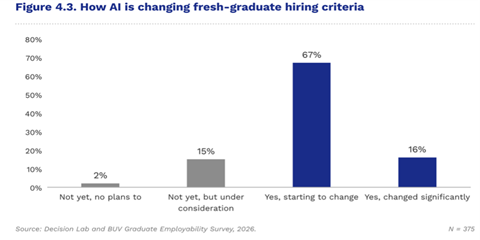
Digital literacy is the only capability area in which fresh graduates meet employers’ expectations, according to a new report. Yet, it is also the standard rising fastest, as businesses increasingly expect new hires to use AI effectively in the workplace. Some 83 per cent of employers say AI has changed, or is beginning to change, their hiring criteria, while 94 per cent report higher expectations for digital and AI capabilities than they had two to three years ago.

INFRASTRUCTURE / CONSTRUCTION / LOGISTIC / PORT
ĐÀ NẴNG GREEN-LIGHTS US$105 MILLION THAI DEVELOPMENT DEAL
The central city has approved an investment proposal by Thailand’s WHA Group to develop infrastructure for the 400ha WHA Đà Nẵng Industrial Park project on two communes of Thăng Bình and Đồng Dương, with an investment of more than VNĐ2.7 trillion (US$105 million). The city said it approved WHA Industrial Development International's status as an investor in the project, which is expected to take place between 2027 and 2034.

VIETNAM ECONOMY INVESTMENT
MOBILE PHONE EXPORTS RISE 20% TO $51.8 BILLION IN FIRST NINE MONTHS
Exports of mobile phones and components rose 20 per cent year-on-year to nearly US$51.8 billion in the first nine months of 2026, with China, the US and Republic of Korea accounting for more than half of the total. Shipments to the three markets reached a combined $26.18 billion, or 50.6 per cent of total exports of the product group during the period, according to data from the Vietnam Department of Customs under the Ministry of Finance.

VIETNAM ECONOMY INVESTMENT
FRUIT AND VEGETABLE EXPORTS POISED TO HIT $10 BILLION IN 2026
Fruit and vegetable exports are on track to reach nearly US$10 billion in 2026, after rising 19.9 per cent year on year to nearly US$7.4 billion in the first nine months, driven by strong seasonal demand and abundant tropical fruit supplies. The Ministry of Agriculture and Environment said the growth reflected stronger international demand for fresh produce and processed agricultural products.
GARMENT / TEXTILE
TEXTILE EXPORTS FACE DUAL CHALLENGES OF SUSTAINING ORDERS AND BOOSTING EFFICIENCY AMID GROWING COMPETITION
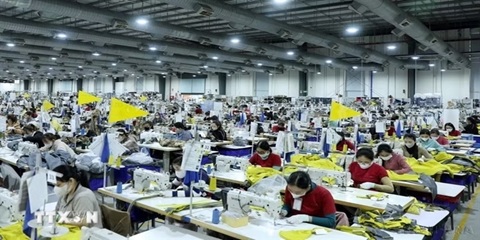
Data shows that the textile and garment sector maintained its growth momentum in the first nine months of this year. The industry's total export turnover reached an estimated US$35.721 billion in the first nine months of this year, up 3.3 per cent year-on-year. Despite posting encouraging export figures, Vietnamese textile and garment enterprises continue to navigate unpredictable market variables.
Events Sponsors






















